Event Planner vs Event Manager: What's the Difference?
From concept design and budgeting to live execution and on-site problem solving — understand how event planners and event managers differ, and discover which service your celebration needs.
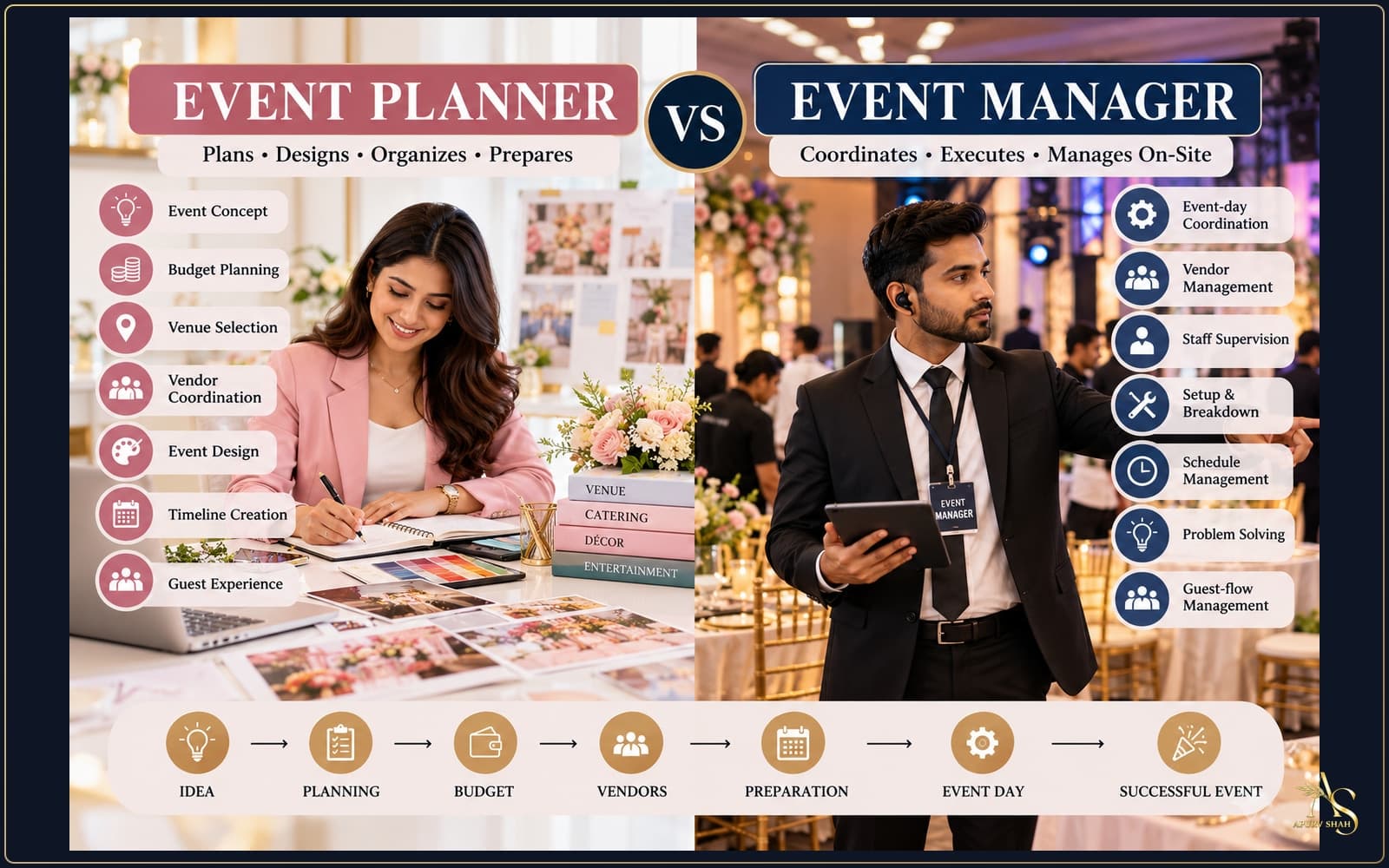
Comparing the architectural pre-event planning phase with live on-site event execution.
Planner vs Manager: Blueprint vs Execution
An event planner focuses mainly on planning before the event—concept, budget, venue, vendors and design. An event manager focuses mainly on execution—staff, setup, schedule, vendors and real-time event-day coordination.
If you are organizing a high-profile corporate conference, a multi-day luxury wedding, or an exclusive social gathering, you will frequently hear the terms event planner and event manager. While many people use them interchangeably, they fulfill two distinct roles within professional event management.
An event planner usually focuses on concept, budget, venue, vendors and pre-event preparation, while an event manager focuses more on live execution, logistics, staff, schedule control and event-day problem solving. In simple terms: one builds the master blueprint, while the other orchestrates the live build on event day.
Understanding this distinction ensures you invest in the exact professional support your celebration requires—saving budget, avoiding logistical gaps, and guaranteeing that your event unfolds smoothly.
01What Is an Event Planner?
An event planner is the strategic and creative architect of your celebration. Their work commences months—and in many cases over a year—before guests arrive. Their primary mission is to translate your vision, style preferences, and financial expectations into an actionable, comprehensive plan.
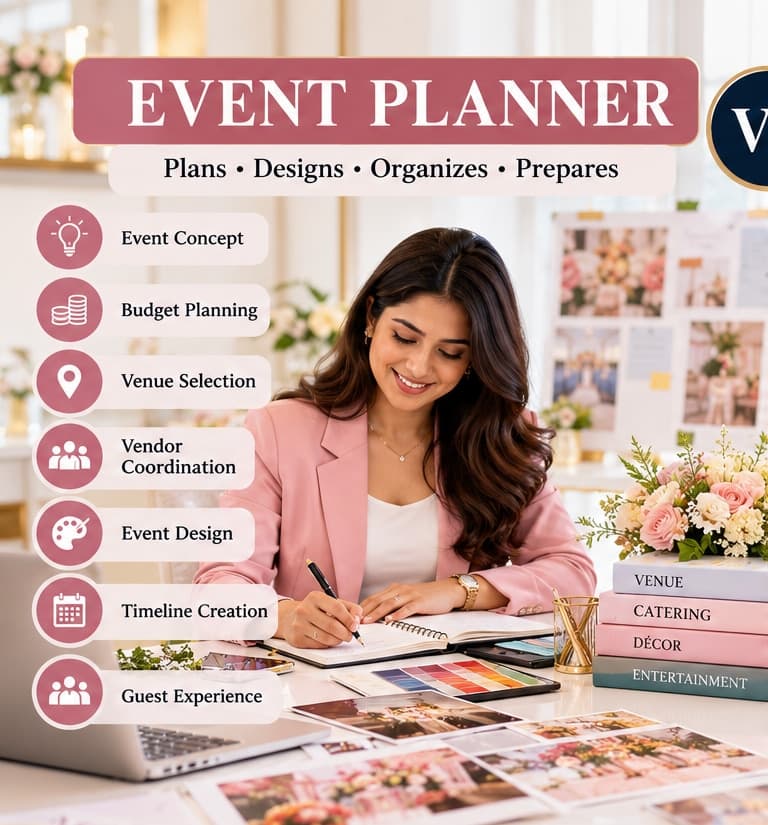
A professional event planner acts as your primary advisor, evaluating creative possibilities against practical financial limitations. They guide decisions across every touchpoint so that the overall celebration feels cohesive, memorable, and stress-free. For a deeper exploration of this role, read our guide on what an event planner does from first idea to event day.
02What Does an Event Planner Handle?
The event planner oversees all the preparatory components that turn an abstract idea into a structured, vendor-contracted reality:
Event Concept & Theme
Defining the overarching mood, aesthetic vision, color palettes, and guest journey.
Budget Planning & Control
Drafting line-item expense allocations, negotiating rates, and avoiding costly budget overruns.
Venue Selection & Contracts
Scouting suitable locations, analyzing venue floor plans, and negotiating favorable contract terms.
Vendor Procurement
Curating trusted caterers, florists, photographers, audiovisual teams, and decorators.
Design & Visual Styling
Building bespoke mood boards, lighting design, tablescapes, and spatial layouts.
Guest Experience & Invitations
Managing guest lists, RSVP tracking, seating charts, and hospitality touchpoints.
Master Timeline Creation
Mapping out deadlines from the initial contract signing right up to event week.
Pre-Event Preparation
Managing administrative logistics, permits, insurance, and vendor confirmations.
03Event Planner Responsibilities
In daily practice, an event planner operates as project director, financial custodian, and creative lead. Key responsibilities include:
- Aligning client goals with realistic budgets
- Sourcing and vetting licensed, reputable vendors
- Coordinating multi-tier contract agreements
- Drafting contingency weather and backup plans
- Structuring detailed payment schedules
- Designing cohesive branding and decorative themes
- Reviewing dietary requirements with catering partners
- Delivering a finalized run-of-show master document
04What Is an Event Manager?
An event manager is the on-site operations director. While the planner designs the blueprint, the event manager brings it to life on the ground. Their responsibility peaks during event week, on event day, and through post-event breakdown.
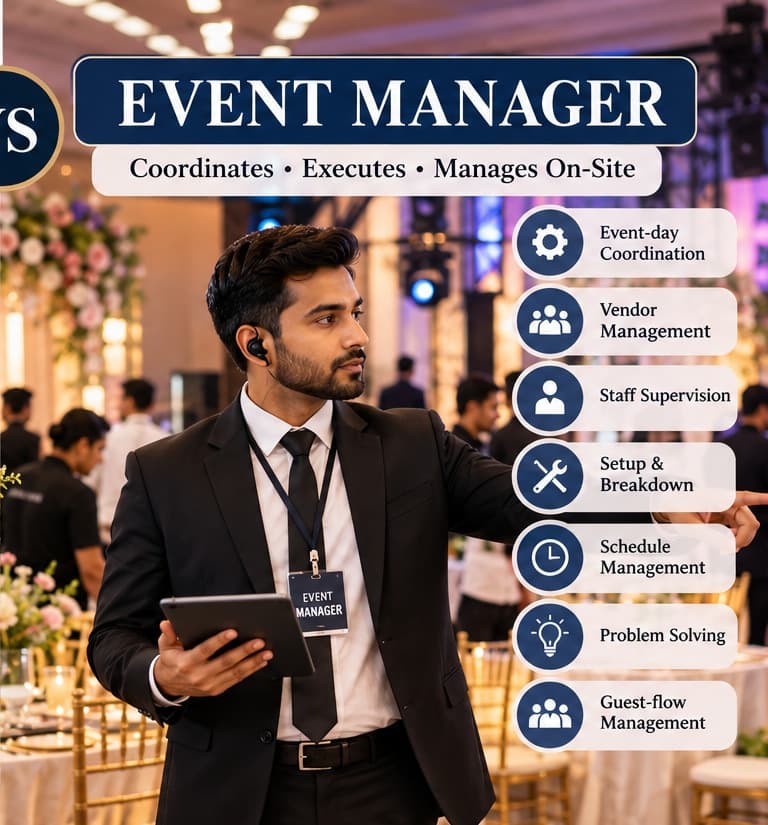
Event managers excel at dynamic problem-solving, schedule enforcement, and team synchronization. When a generator falters, a guest count surges unexpectedly, or weather forces an outdoor reception indoors, the event manager calmly makes live executive decisions so guests experience seamless hospitality.
05What Does an Event Manager Handle?
The event manager oversees live on-site operations from morning setup through late-night breakdown:
On-Site Coordination
Acting as central command for vendors, venue representatives, and security personnel.
Vendor Load-In & Setup
Checking delivery timetables, directing equipment trucks, and inspecting booth installations.
Staff Supervision
Briefing hospitality staff, coordinating ushers, and synchronizing banquet service teams.
Schedule & Program Control
Keeping speeches, performances, ceremonial cues, and meal services strictly on time.
Live Crisis Management
Troubleshooting technical glitches, equipment failures, or weather shifts in real time.
Guest-Flow & Crowd Direction
Ensuring orderly arrivals, smooth registration, frictionless bar queues, and safe exits.
Breakdown & Strike Oversight
Supervising rental returns, venue inventory checks, and site restoration after the party ends.
06Event Manager Responsibilities
On the day of execution, an event manager is constantly on the move, safeguarding the client's peace of mind:
- Verifying all vendor arrivals against the run-of-show
- Testing AV sound, microphones, and stage lighting
- Managing VIP arrivals and private green room staging
- Ensuring emergency exits and safety compliance
- Coordinating live cues for music, dining, and ceremonies
- Resolving unforeseen delays or supplier absences
- Serving as the point of contact so hosts enjoy their event
- Conducting post-event venue walk-throughs to protect deposits
07Event Planner vs Event Manager: Core Differences
The core difference between an event planner and an event manager lies in their operational timeline and focal priorities. While planners work in the realm of creative ideas, budgeting, and contracts, managers operate in the realm of logistics, timing, and direct physical execution.
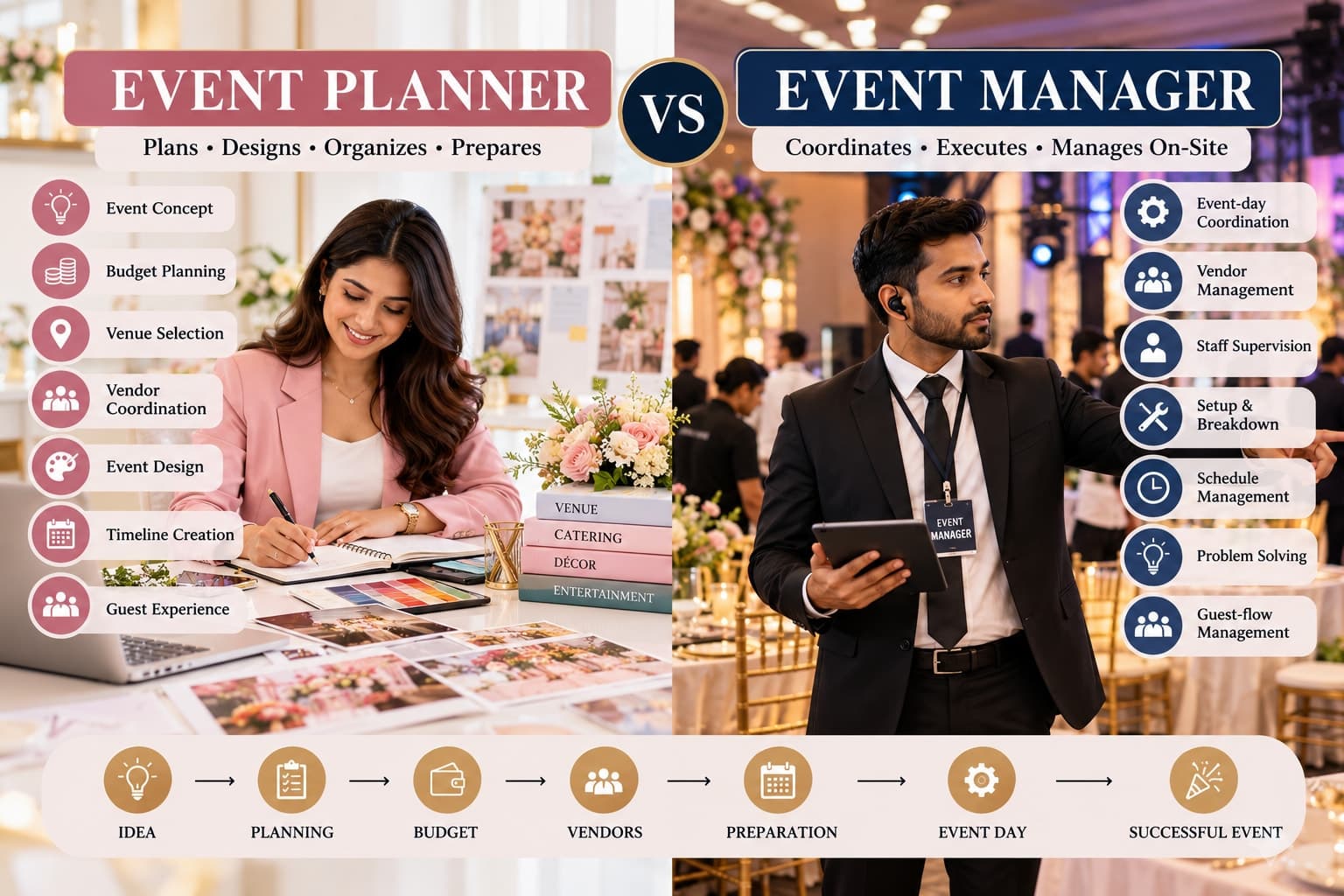
Side-by-Side Responsibility Breakdown
| Responsibility | Event Planner | Event Manager | Operational Role |
|---|---|---|---|
| Event Concept & Theme | Primary | Rare | Planners shape the vision, creative mood boards, and aesthetic direction. |
| Budget Planning & Allocation | Primary | Rare | Planners build the financial blueprint and ensure costs remain on budget. |
| Venue Research & Sourcing | Primary | Rare | Planners scout, compare, and negotiate contracts for suitable event venues. |
| Vendor Selection & Contracts | Primary | Coordination | Planners source and hire; managers coordinate their on-site arrival and execution. |
| Event Design & Styling | Primary | Execution Support | Planners design color palettes and layouts; managers verify setup matches plans. |
| Timeline Creation | Master Plan | Execution Schedule | Planners build the multi-month pre-event roadmap; managers enforce day-of run-of-show. |
| Setup & Breakdown Oversight | Oversees/Plans | Direct Execution | Planners define logistics layouts; managers supervise load-in, staging, and strike. |
| Event-Day Live Coordination | Sometimes | Primary | Managers serve as central command on-site; planners often focus on client care. |
| Real-Time Problem Solving | Planning Stage | Live On-Site | Planners mitigate risks beforehand; managers resolve sudden live crises instantly. |
Note: In comprehensive event management companies, both roles work in close partnership under unified leadership.
08The Event Planning Process
An event is a connected journey that evolves through distinct stages. As the project advances from concept to execution, the responsibility shifts seamlessly from planning architecture to managerial coordination.

Need a practical step-by-step checklist to guide your timeline? Explore our companion guide: Complete Event Planning Checklist: From the First Idea to Event Day.
09Can an Event Planner and Event Manager Be the Same Person?
Yes, they can—but it depends directly on the scale, budget, and complexity of your celebration.
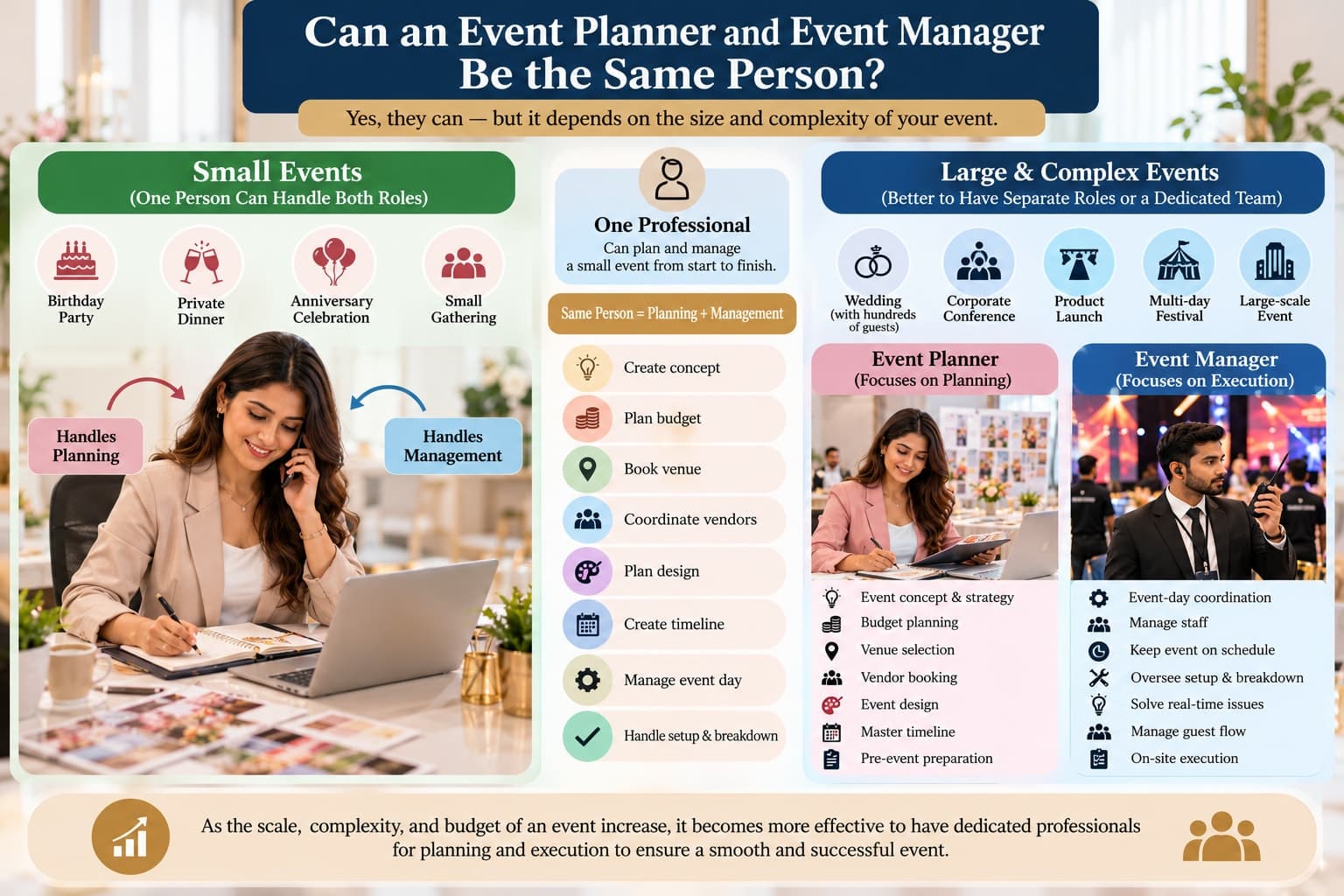
One Person Handles Both Roles
For smaller gatherings—such as private dinner parties, milestone birthdays, or intimate anniversaries—one experienced professional can easily plan the theme, book the venue, and show up on the day to manage catering and guest arrivals.
Requires Separate Roles or a Dedicated Team
When an event involves hundreds of guests, multi-day schedules, concurrent vendor deliveries, and extensive production, expecting one person to oversee pre-planning and live on-site logistics creates dangerous bottlenecks. You need dedicated specialists working in synergy.
Real-World Case Examples
Wedding Example: Design vs Execution
The wedding planner conceptualizes the mandap decor, curates floral color stories, books the bridal makeup artist, and negotiates catering menus. On wedding day, the event manager ensures the baraat procession starts punctually, manages guest transit, cues the bride’s entry music, and oversees the dinner buffet timing.
Corporate Conference Example: Strategy vs Operations
The corporate event planner secures keynote speakers, reserves hotel room blocks, manages sponsorship decks, and organizes attendee registration collateral. The event manager tests wireless presentation clickers, coordinates live video feeds, manages badge check-in turnstiles, and directs coffee-break turnaround times.
10Which Service Do You Need?
Use this simple 3-step decision framework to identify the exact level of support you need:
Still Planning Everything?
You have an idea and date, but you need professional guidance to select a venue, define a realistic budget, and secure vetted vendors.
Already Planned, Need Execution?
You have booked your venue, chosen caterers, and purchased decor, but you need an experienced director to run event-day operations so you can celebrate stress-free.
Need Planning + Execution?
You want comprehensive peace of mind from first vision to midnight breakdown—creative concepts, budget management, vendor contracts, and on-site coordination.
Evaluating potential partners? Read our strategic checklist on how to choose the right event planner for your event.
11When You Need Full Event Management
For major life milestones and brand-defining corporate functions, the ideal choice is a comprehensive event management company that bridges both worlds. When planning and execution exist under one coordinated leadership:
No Handover Misunderstandings
The team executing the event on the day is the same team that crafted the master plan.
Strict Financial Discipline
Vendor contracts and real-time execution costs are monitored under one centralized budget.
Unified Aesthetic Vision
Lighting, floral designs, stage sets, and tablescapes align precisely with initial renderings.
Complete Host Relaxation
Hosts and corporate leadership can focus entirely on their guests while professionals run the show.
Explore our curated event services, browse our tailored event packages, and review real celebration showcases in our event portfolio.
12Frequently Asked Questions
Clear answers to common questions about event planners, event managers, and full-service event coordination:
1. What is the difference between an event planner and an event manager?
An event planner focuses on the creative, financial, and logistical preparation leading up to the celebration—such as event concept development, venue scouting, vendor sourcing, budget tracking, and master timelines. An event manager focuses on the live execution—supervising venue setup, coordinating vendors on event day, directing staff, managing the schedule, and troubleshooting live issues.
2. Is an event planner the same as an event manager?
In casual conversation, the two terms are often used interchangeably, but in the professional event industry, they denote two distinct disciplines. Event planning is primarily long-term preparatory architecture, while event management is operational logistics and real-time execution.
3. Do event planners manage events on the day?
Not always. Some independent planners conclude their service once the master plan, vendor contracts, and run-of-show are finalized. However, full-service event planning companies like AS Event Management provide integrated planning and event-day management to ensure seamless handover and flawless execution.
4. What does an event manager do on event day?
On event day, the event manager is the on-site conductor. They supervise venue access and vendor load-in, test audiovisual systems, coordinate catering timelines, direct event staff and security, cue keynote speakers or ceremonial entrances, resolve technical hiccups, and oversee venue breakdown and inventory wrap-up.
5. Can one person be both an event planner and event manager?
Yes, for smaller, more intimate gatherings like private dinner parties, milestone birthdays, or boutique social events, a skilled professional can successfully handle both planning and on-site coordination. For larger events like high-stakes corporate conferences or weddings with hundreds of guests, the workload requires separate dedicated specialists or an experienced team.
6. Which service do I need for my event?
If you have just an idea and need assistance selecting a venue, managing costs, and securing dependable vendors, you need an event planner. If you have already booked your vendors and finalized details but need a professional to run event-day operations so you can relax, you need an event manager. If you want stress-free coverage from concept to cleanup, you need a full event management service.
7. What is full event management?
Full event management is an end-to-end service that unifies strategic planning, creative design, vendor contract negotiations, guest management, and live on-site event coordination under one coordinated team. AS Event Management specializes in full-service delivery for weddings, corporate galas, and social celebrations.
13Conclusion
Understanding the difference between an event planner and an event manager is the first step toward a successful celebration. An event planner designs the creative blueprint, establishes the budget, and contracts the vendors. An event manager takes the reins on event day, directing staff, coordinating logistics, and ensuring flawless execution.
Whether you are organizing a dream wedding, an executive corporate conference, or a milestone birthday party, choosing the right professional support transforms stress into celebration. With AS Event Management, you never have to choose between planning strategy and operational excellence—you gain an integrated team that delivers both seamlessly.
Not Sure Whether You Need Planning or Event-Day Management?
Share your event type, date, guest count, location and current planning stage with AS Events. We can help you understand whether you need planning support, event-day management or a complete event management service.