
How to Create an Event Budget: A Practical Guide for Any Event
A practical guide to event budget planning, including cost categories, hidden expenses, contingency funds, vendor comparisons, tracking, and final budget control.
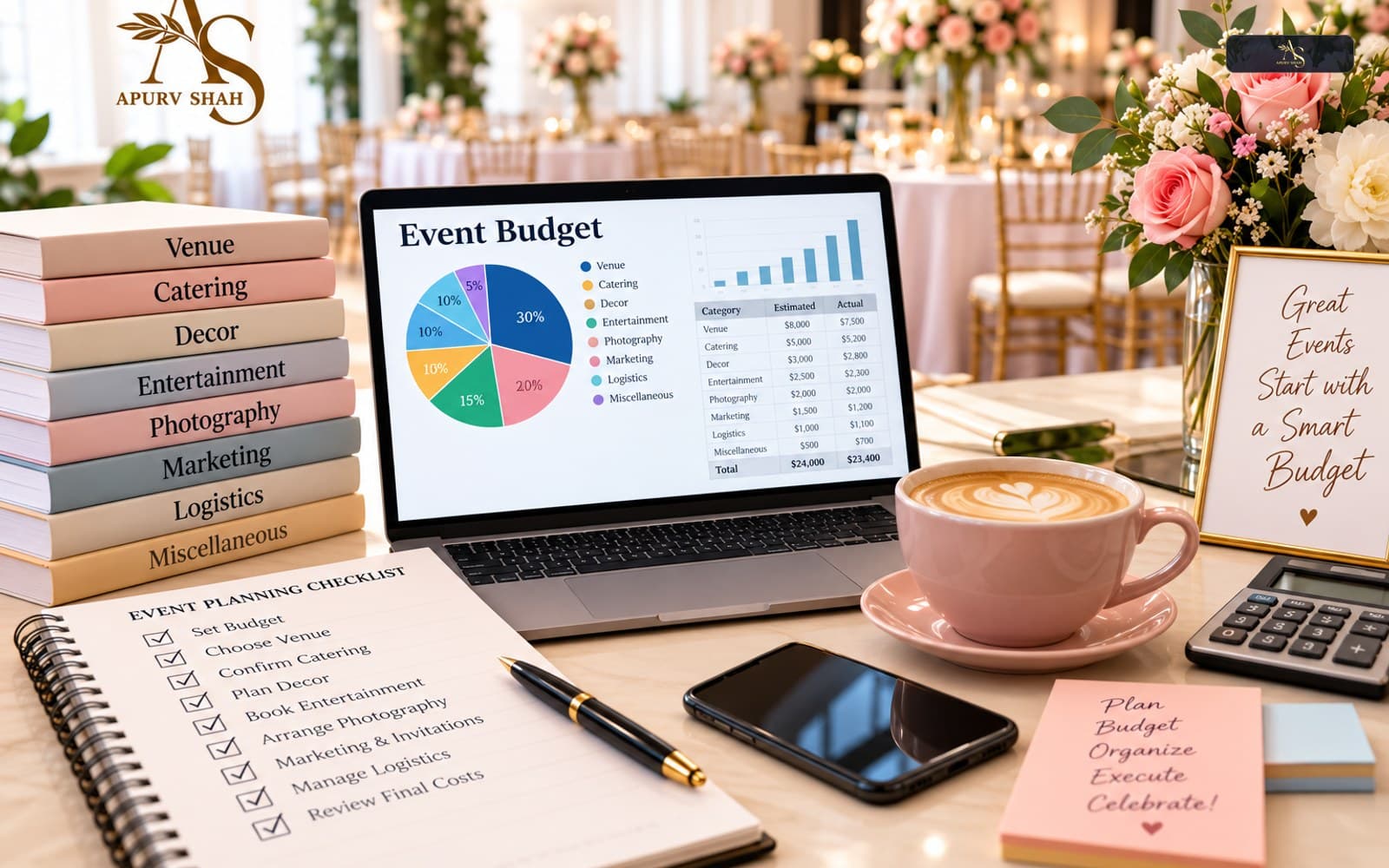
Structured financial management transforms creative concepts into realistic, well-executed celebrations.
Quick Answer: How to Create an Event Budget
A strong event budget starts with the total available funding, then separates costs into categories such as venue, catering, technology, staffing, décor, entertainment, transportation, marketing and contingency. Track estimated, quoted, committed and actual costs throughout the planning process to maintain complete financial control.
Within professional event management, an event budget is a planning and decision-making tool that helps organize expected costs, committed spending, actual expenses, payment timing, and contingency funds.
1. Why an Event Budget Matters
Whether you are organizing a corporate summit, an intimate anniversary gathering, an extravagant wedding, or an industry exhibition, financial clarity influences every single planning decision. Venue selection dictates catering rules and logistics. Guest count determines table styling, dining portions, and staffing. Audiovisual staging impacts attendee engagement. A strong event budget brings these intertwined decisions together so the celebration remains realistic, beautiful, and completely stress-free.
An event budget is far more than an Excel sheet containing numbers. It is an active decision-making tool. A well-structured event management budget illuminates what you can comfortably afford, where your resources create the greatest experiential impact, what money is already contractually committed, and where you still hold financial flexibility.
Importantly, budgeting is not about compromising quality or pinching pennies. The true goal of event budget planning is intentionality: allocating funds deliberately so that guest comfort, sensory elegance, and operational safety are protected without incurring unexpected post-event debts. Hiring a professional event planner ensures that market pricing is verified and contracts are negotiated effectively from day one.
2. Setting Your Financial Parameters
Before browsing venues, sampling catering menus, or committing to styling vendors, you must establish unambiguous financial boundaries. Starting with an explicit spending parameter prevents the common pitfall of falling in love with costly concepts early, only to face painful cuts as the event date approaches.
Determine Total Funding Sources
Itemize confirmed funds separately from projected income. A corporate event may operate on a fixed marketing allocation; a public gala may depend on ticket tiers and corporate sponsorships; a wedding may involve family contributions. Separate guaranteed capital from speculative receipts.
Hard Ceiling vs. Working Budget
Establish a hard financial ceiling—the absolute maximum amount you are willing and able to spend. Keep your working operational budget 10% to 15% below this ceiling. This preserves an untouched contingency fund for unexpected permits, overtime fees, or sudden weather adjustments.
Define Your Core Event Objectives
Your core purpose must guide where money flows. If the objective is corporate relationship building, acoustics, venue intimacy, cocktail hospitality, and seamless dining deserve top priority. If the goal is a high-energy celebration, world-class entertainment, dynamic lighting, and immersive stagecraft take precedence. If the gathering is educational, speaker comfort, crystal-clear projection, and pristine Wi-Fi must be prioritized over elaborate floral arrangements.
3. Identifying and Categorizing Event Costs
One of the most essential habits in event cost management is organizing expenditures into clear, standardized categories. This structure allows planners to benchmark proposals against industry norms, spot missing logistical items, and explain numbers clearly to executive committees or family stakeholders.
Venue & Logistics
Includes: Site rental fee, security, cleaning, setup/teardown hours, insurance, permits, and utilities.
Food & Beverage
Includes: Plated meals, buffets, hors d’oeuvres, bar packages, service staff, barware, and dietary menus.
Programming, AV & Tech
Includes: Sound systems, stage lighting, LED screens, streaming gear, projection, and on-site AV technicians.
Décor, Floral & Styling
Includes: Centerpieces, stage backdrops, entrance arches, floral arrangements, specialty linens, and ambient lighting.
Entertainment & Speakers
Includes: Live bands, DJs, master of ceremonies (emcee), keynote speakers, hospitality riders, and lodging.
Marketing & Promotion
Includes: Branding, invitations, event website, ticketing platforms, paid digital campaigns, signage, and badges.
Staffing & Coordination
Includes: Event planners, day-of coordinators, registration teams, security personnel, and guest ushers.
Transportation & Logistics
Includes: Guest shuttles, VIP transfers, valet parking, vendor delivery fees, and loading dock access passes.
Administrative & Permits
Includes: Event insurance riders, music licensing (PPL/IPRS), municipal permits, and payment processing fees.
Contingency Reserve
Includes: Dedicated safety buffer for unexpected operational needs, weather shifts, rush orders, and adjustments.
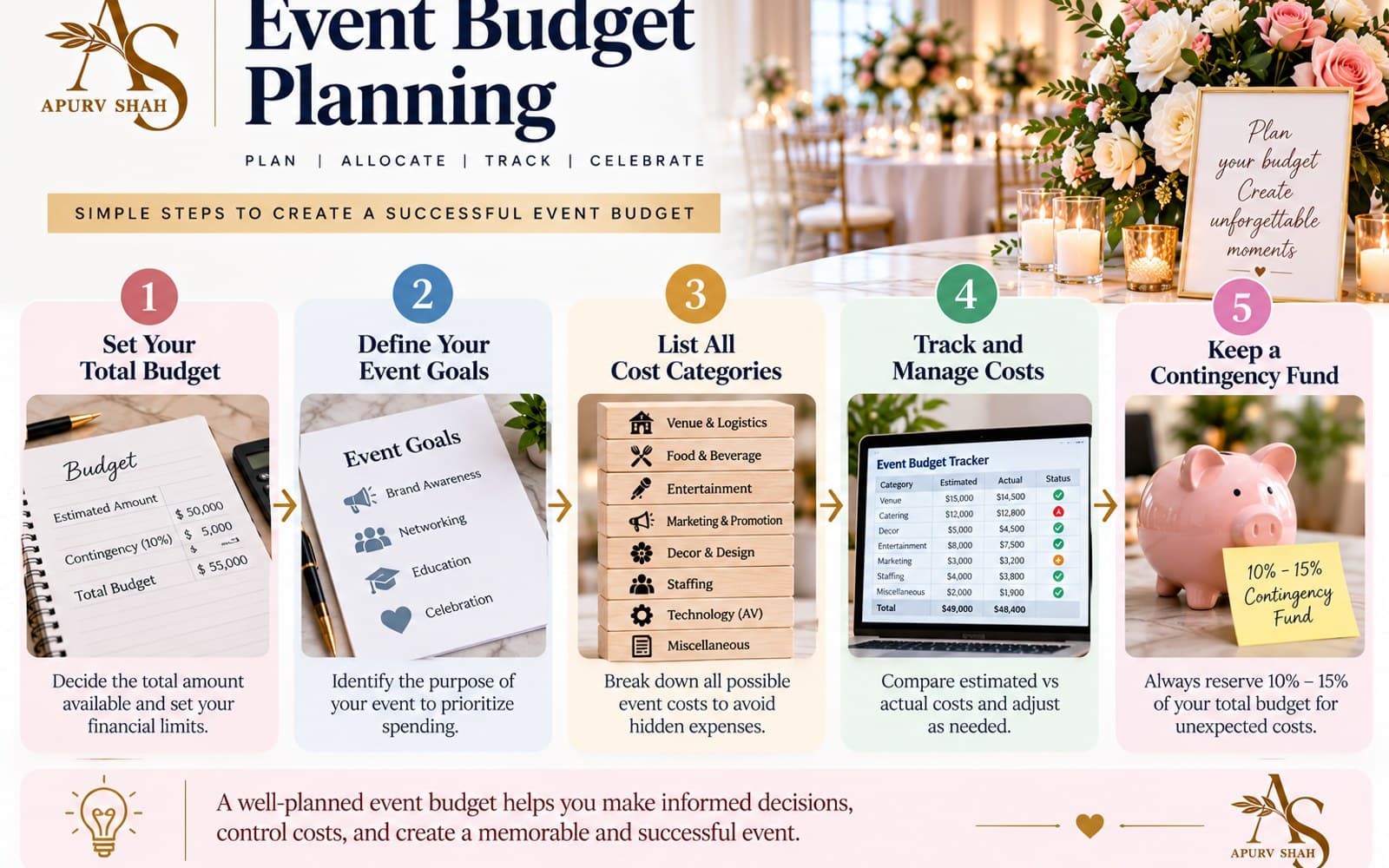
Segmenting total capital across dedicated cost centers prevents surprise shortfalls in critical categories.
4. Hidden and Often-Forgotten Event Costs
Budgets rarely fail because planners forgot to rent the ballroom or hire the caterer. They fail because dozens of auxiliary charges were omitted from initial estimates. When requesting quotes, insist on full out-the-door pricing including logistical surcharges, teardown hours, and tax obligations.
Watch Out for These 12 Common Hidden Charges
- Taxes, service charges and gratuities (often 18% – 28% above base quote)
- Delivery, transportation and fuel surcharges
- Setup, load-in and late-night teardown labor fees
- Overtime penalties and extended venue operating hours
- Municipal permits, noise licenses and sound curfews
- Event liability insurance and third-party vendor certificates
- Equipment rental security deposits and replacement damage fees
- Last-minute printing, directional signage, badges and collateral
- Guest parking fees, valet staffing and shuttle waiting time
- Emergency day-of purchases and backup supplies
- Credit card merchant fees and ticketing payment gateway charges
- Power drops, electrical distribution and generator rentals
Always insert a dedicated line item for incidental expenses rather than relying on memory. When negotiating vendor contracts, verify whether load-in, elevator usage, overtime staff fees, and cleanup are included.
5. The Essential Event Budget Checklist
An event budget checklist translates your high-level vision into an actionable audit tool. Use this responsive framework to verify that every necessary contract item is accounted for before committing funds.
| Check | Budget Category | What to Include in Estimates | Priority Level |
|---|---|---|---|
| Venue & Facilities | Base rental, damage deposit, cleaning fees, security guard mandate, load-in/load-out labor hours, power supply. | Essential | |
| Catering & Beverages | Menu pricing per head, tasting fees, bar packages, bartending labor, cake cutting, glassware rentals, gratuity. | Essential | |
| Technology & Audiovisual | PA systems, wireless mics, display screens, stage lights, live streaming, high-speed Wi-Fi, technicians. | High Priority | |
| Marketing & Signage | Invitations, event website, badges, digital marketing, welcome banners, stage backdrops, print programs. | Medium Priority | |
| Staffing & Management | Professional event planner, floor managers, registration hosts, security team, hospitality coordinators. | Essential | |
| Décor & Styling | Floral centerpieces, stage décor, custom fabric draping, lounge furniture, lighting trusses, tabletop styling. | High Priority | |
| Entertainment & Talent | Artist performance fees, rider hospitality, travel & hotel accommodations, DJ equipment, sound check time. | High Priority | |
| Transportation & Access | Guest shuttles, VIP car services, parking validation, loading dock access, equipment freight trucks. | Medium Priority | |
| Administrative & Legal | Liability insurance policy, entertainment licensing, merchant payment fees, contracts, office supplies. | Essential | |
| Contingency Fund | 10% – 15% dedicated reserve buffer for weather contingencies, headcount surges, and emergency fixes. | Essential |
Customize this checklist according to your event scope. A luxury wedding requires photography, attire, and guest accommodations; a corporate conference requires badging systems, speaker honorariums, and staging. For full operational execution, consult our Complete Event Planning Checklist.
6. How to Build an Event Planning Budget Step by Step
Follow this proven five-step methodology to transform conceptual figures into a realistic, working event plan that keeps costs firmly in line:
Step 1: Set the Total Budget
Establish the total approved spending ceiling. Separate guaranteed funds from speculative ticket sales or vendor sponsorships. Never treat uncertain revenue as confirmed cash in hand.
Step 2: Establish Non-Negotiable Priorities
Rank the core elements that most directly support your event purpose. If guest dining is paramount, allocate resources there first; this creates an objective hierarchy when vendor quotes exceed preliminary goals.
Step 3: Research Market Rates & Real Costs
Request itemized written estimates from venues and vendors. Document deposit schedules, validity dates, cancellation policies, and exact inclusions before signing binding commitments.
Step 4: Allocate Preliminary Amounts
Assign target funding brackets to every category, holding a 10% to 15% reserve. As real vendor proposals materialize, refine preliminary amounts to reflect actual quoted figures.
Step 5: Compare Estimated and Actual Costs Continually
As vendor agreements are executed, substitute estimated lines with contracted values. Maintain original projections so you can measure financial variance throughout the planning lifecycle.
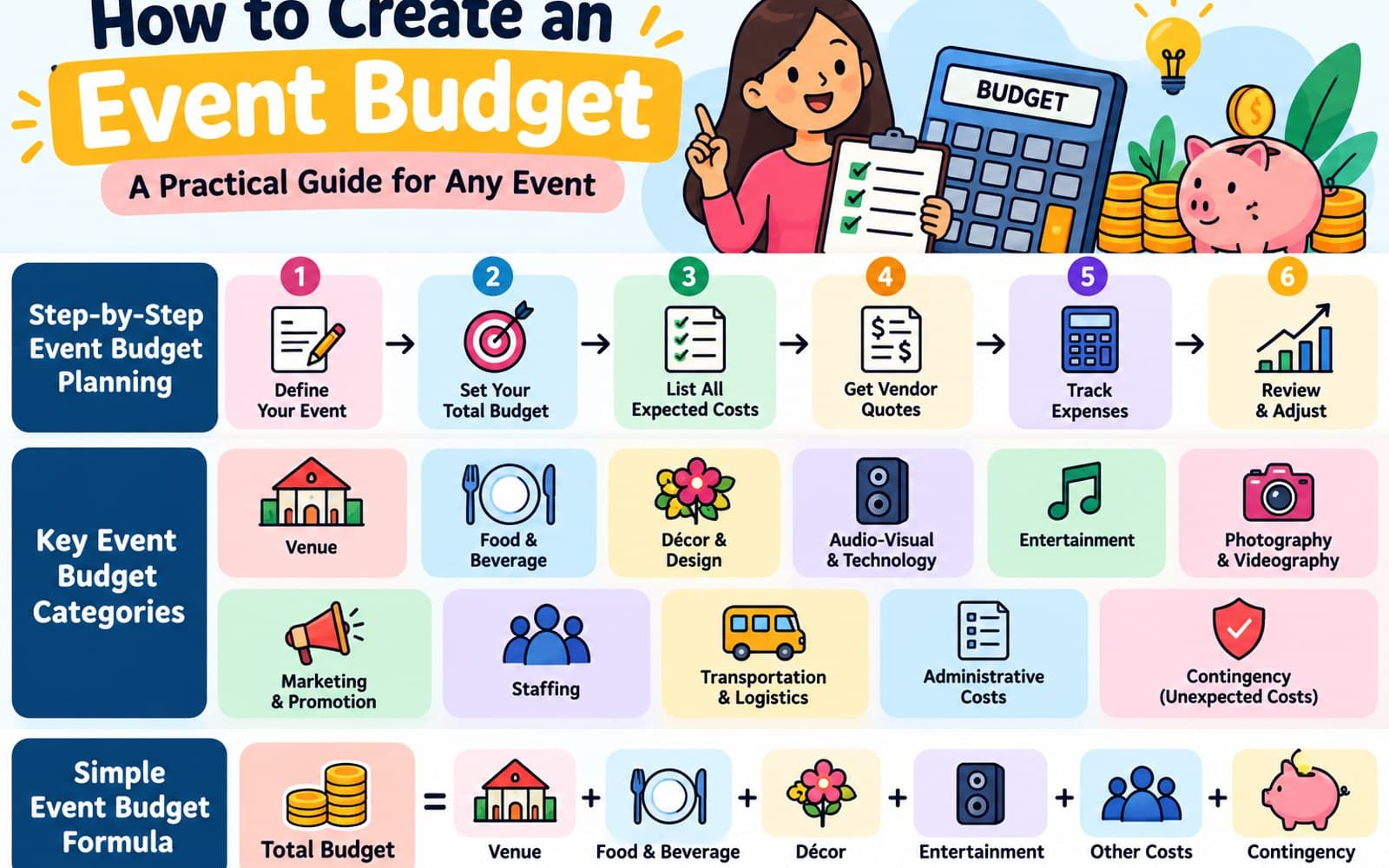
A structured step-by-step methodology ensures seamless transitions from preliminary estimates to final invoice reconciliation.
7. Create a Master Event Budget Tracking Spreadsheet
A dedicated tracking spreadsheet serves as your central source of truth. The platform matters far less than the discipline of recording entries. Whether you utilize Google Sheets, Microsoft Excel, or specialized event budgeting software, maintain these critical tracking parameters:
Sample Master Budget Tracker Layout
| Category | Vendor | Estimated | Contracted | Deposit Paid | Balance Due | Variance | Status |
|---|---|---|---|---|---|---|---|
| Venue & Logistics | Grand Heritage Ballroom | ₹4,50,000 | ₹4,60,000 | ₹2,30,000 | ₹2,30,000 | +₹10,000 | Contracted |
| Catering & Dining | Royal Gourmet Banquets | ₹7,00,000 | ₹7,35,000 | ₹2,50,000 | ₹4,85,000 | +₹35,000 | In Progress |
| Audiovisual & Staging | Acoustic Waves Pro | ₹3,00,000 | ₹2,90,000 | ₹1,50,000 | ₹1,40,000 | -₹10,000 | Contracted |
| Décor & Florals | Artisan Floral Creations | ₹3,50,000 | ₹3,40,000 | ₹1,00,000 | ₹2,40,000 | -₹10,000 | Contracted |
| Contingency Reserve | Reserved Financial Buffer | ₹2,50,000 | ₹2,50,000 | In Reserve | ₹2,15,000 | On Budget | Active Reserve |
8. The Importance of a Contingency Fund
Unexpected costs are completely normal in live event production. Bad weather requires waterproof canopy rentals. Additional VIP guests require extra table arrangements. Audio systems require auxiliary power generators. A contingency fund provides financial breathing room so your event team can resolve surprises without compromising critical elements.
Planning Guideline: 10% to 15% Contingency Reserve
A commonly used planning range is 10% to 15% of the working budget. Please note: this must be treated strictly as a planning guideline, NOT a universal rule. Events with significant outdoor exposure, multi-day itineraries, custom stage construction, or international shipping often warrant an 18% to 20% reserve, whereas routine corporate meetings in fully equipped facilities may require only 8% to 10%.
9. Managing the Budget in Real Time
An event management budget must be monitored dynamically throughout the planning lifecycle, not merely consulted at kick-off and post-mortem. Set an audit cadence aligned with your timeline: monthly reviews during early concept stages, bi-weekly reviews 3 to 6 months out, and weekly or real-time audits during the final month.
Analyze Variance Strategically
Variance is the differential between planned and actual costs. A negative variance in one category is manageable if compensated by savings in another. The crucial test is whether the event objective is preserved without breaching the overall ceiling.
Track Cash Flow & Deposit Due Dates
Two budgets can have identical bottom-line figures but drastically divergent cash flow schedules. Stagger milestone payments so your liquidity is never jeopardized during peak deposit cycles.
10. How to Compare Vendor Quotes
Evaluating vendor proposals purely by their headline price is a dangerous pitfall. One provider may appear cheaper simply because their bid excludes setup labor, freight, generator fuel, or mandatory cleanup fees. Another quote may seem higher upfront but represents an all-inclusive, risk-free package.
- Compare identical scopes of work and equipment specs
- Confirm all taxes, service fees, and gratuity policies
- Verify delivery, setup, and late-night strike charges
- Inspect deposit milestones and cancellation terms
- Record quote expiry dates to guard against price hikes
- Identify hourly overtime rates for staff and equipment
11. Practical Ways to Control Event Costs Without Reducing Quality
Effective cost control is not about austerity; it is about eliminating waste in low-impact areas while investing heavily in the moments guests will remember. Practice these ten battle-tested strategies:
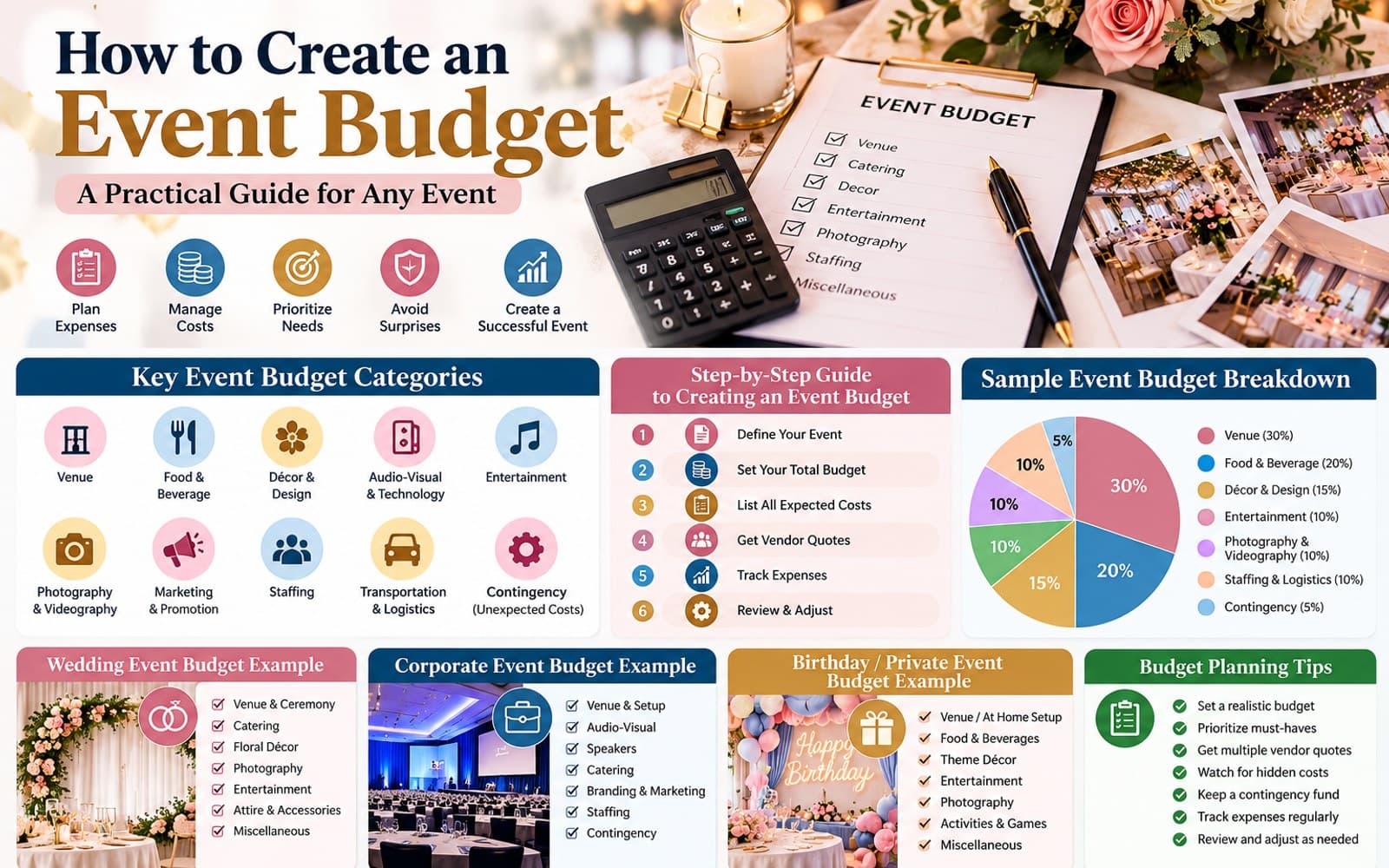
Strategic cost control preserves unforgettable attendee experiences while eliminating unneeded operational waste.
12. Event Budget Planning Timeline
Budgeting is an evolving discipline that changes in focus as your date approaches. Use this chronological framework to align financial actions with production milestones:
Define Financial Ceiling & Core Objectives
Identify every funding source (company allocation, sponsorship, personal funds), establish a firm financial ceiling, draft preliminary guest counts, and begin researching primary venues.
Lock In Major Space & Primary Vendors
Contract the venue, secure key anchor vendors (planner, production partner, marquee caterer), and record all initial deposit milestones and contract payment terms.
Refine AV, Décor, Entertainment & Staffing
Gather detailed written vendor proposals for audiovisual, styling, musicians, photographers, and guest hospitality. Compare quotes by total scope rather than headline rates.
Audit Committed Costs & Adjust Allocations
Review actual signed contracts against preliminary estimates. If catering or production came in higher than anticipated, rebalance flexible categories or tap contingency cautiously.
Finalize Floor Plans, Orders & Interim Balances
Confirm detailed equipment orders, rental quantities, guest seating arrangements, print deliverables, and payment schedules for secondary milestone installments.
Lock Final Headcount & Balance Schedule
Submit firm RSVP numbers to catering, verify load-in delivery windows to prevent overtime labor, review the contingency balance, and prepare scheduled final balance transfers.
Supervise Deliveries & On-Site Expenditures
Manage approved day-of purchases through the designated master budget owner. Guard against unplanned vendor add-ons without prior written consent.
Reconcile Final Invoices & Analyze Variance
Audit all final vendor invoices, release security deposits, verify incidental charges, compute final variance percentages, and document financial lessons for future events.
13. Who Should Manage the Event Budget?
While planning input is collaborative, exactly one person or role must own the master budget. Depending on your organizational structure, that owner may be your professional event planner, corporate project lead, or wedding director. When multiple parties independently authorize expenses, budgets disintegrate quickly.
Establish Clear Financial Controls
- Expense Authorization: Only the designated owner can sign purchase orders or approve contract riders.
- Contingency Release: Require explicit dual-signoff before releasing any reserve funds.
- Invoice Centralization: Direct all vendor invoices to a single inbox to eliminate duplicate disbarments.
14. Final Event Budget Review Before Event Day
Conduct a rigorous pre-event financial audit 7 to 10 days before showtime. This structured review verifies that every contractual commitment and outstanding payment is locked down:
Crucial reminder: If any vendor was verbally promised an additional payment or tip, enter it immediately as a committed expense to avoid day-of cash shortfalls.
15. Frequently Asked Questions About Event Budget Planning
Clear answers to common questions about budgeting, vendor quote comparisons, cost management, and contingency reserves.
Building Financial Confidence for Your Next Event
An accurate event budget is the cornerstone of exceptional event management. By clearly categorizing costs, proactively identifying hidden expenses, building a 10% to 15% contingency buffer, and tracking commitments in real time, you protect your celebration from financial surprises.
Explore our related event planning guides to continue organizing your upcoming occasion:
- Complete Event Planning Checklist: From Idea to Event Day
- How Early Should You Hire an Event Planner? Booking Timeline Guide
- Event Planner vs Event Manager: What's the Difference?
- What Does an Event Planner Do? A Complete Guide to Event Planning Services
- How to Choose the Right Event Planner for Your Event
Need Help Building a Realistic Event Budget?
Share your event type, date, guest count, location, priorities and expected budget with AS Events. We can help you organize costs, compare vendors, track commitments and build a practical event plan.